WordPress now powers around 43.5% of all websites on the internet, making it one of the biggest targets for cyberattacks. Every day, thousands of websites face malware infections, brute force attacks, plugin exploits, and phishing attempts. In 2026, these threats are becoming smarter with AI-driven automation and advanced attack methods.
Modern WordPress websites also depend on multiple plugins, APIs, payment systems, and third-party tools. That means a single vulnerable plugin or weak login can expose an entire website to hackers, data loss, and downtime.
That’s why WordPress security in 2026 is all about proactive protection. From real-time threat intelligence to advanced firewall systems and malware scanning, this guide explores the biggest security trends shaping the future of WordPress security and how VMP™ Security helps websites stay protected.
1. The State of WordPress Security in 2026

WordPress is used by 59.6% of all websites with a known content management system. That means WordPress powers around 42.2% of all websites on the internet today. That massive market share makes WordPress one of the most attractive targets for hackers and automated cyberattacks.
According to Patchstack’s WordPress security report, 11,334 new vulnerabilities were discovered in the WordPress ecosystem in 2025. That represents a 42% increase compared to 2024, showing how rapidly WordPress security threats are growing.
The report also found that 4,124 vulnerabilities were serious enough to require RapidMitigate protection rules. Additionally, 1,966 vulnerabilities received high severity scores, making them likely targets for automated mass-scale cyberattacks.
The biggest concern in 2026 is speed. Security researchers report that some WordPress vulnerabilities begin getting exploited within hours after public disclosure. Automated bots continuously scan websites for outdated plugins, weak logins, and unpatched software.
At the same time, modern WordPress websites are more connected than ever. WooCommerce stores, payment gateways, cloud tools, APIs, and third-party plugins all increase the attack surface for hackers.
That’s why WordPress security in 2026 is shifting toward proactive protection with:
- Real-time threat intelligence
- Advanced firewall protection
- Automated malware scanning
- Two-factor authentication
- Vulnerability monitoring
Modern solutions like VMP™ Security help website owners stay protected through layered security, real-time monitoring, and intelligent threat detection built specifically for WordPress.
2. AI-Powered Cyber Attacks Are Becoming Smarter

AI is changing cybersecurity very quickly, and WordPress websites are becoming a major target. According to Darktrace, 74% of cybersecurity professionals say AI-powered threats are already affecting organizations.
Hackers now use AI tools to scan thousands of WordPress websites for weak passwords, outdated plugins, and security vulnerabilities within minutes. AI-generated phishing emails and fake login pages are also becoming harder to detect.
Modern malware is becoming smarter, too. Some threats can now avoid traditional detection methods and automate attacks at scale.
That’s why proactive WordPress security plugins like VMP Security are becoming essential for real-time protection, malware scanning, and advanced threat detection.
Why Traditional Security Methods Are Struggling
Traditional WordPress security setups often rely on:
- Manual updates
- Basic malware scanning
- Static firewall rules
- Simple password protection
But these methods struggle against modern automated attacks that evolve constantly.
Hackers now use:
- AI-generated attack patterns
- Automated vulnerability scanners
- Credential stuffing bots
- Smart brute force systems
- Evasive malware techniques
As threats become more advanced, website owners need security systems that can react in real time rather than relying only on manual intervention.
How VMP™ Security Helps Protect Against Modern Threats
Modern WordPress security platforms like VMP™ Security are designed to respond to evolving attack methods through layered protection systems.
These include:
- Advanced Web Application Firewall (WAF)
- Real-time threat intelligence
- Malware scanning and detection
- Login security protection
- Two-factor authentication
- Live traffic monitoring
- Vulnerability monitoring
Instead of waiting for damage to happen, proactive security tools and their real-time threat intelligence help identify suspicious behavior early and block attacks before they can compromise a website.
In 2026, AI is helping both attackers and defenders. The difference comes down to whether your website security is evolving fast enough to keep up.
Want stronger protection against modern AI-driven threats?
Try VMP™ Security for smarter real-time WordPress threat protection and advanced malware defense.
3. Real-Time Threat Intelligence Will Become Essential

In 2026, WordPress security is no longer just about blocking attacks after they happen. Modern threats move too quickly for delayed responses. Today, vulnerabilities can be exploited within hours of becoming public, especially in popular plugins and themes.
According to IBM’s Cost of a Data Breach report, organizations take an average of 258 days to identify and contain a data breach. That delay can lead to major damage, including data theft, loss of SEO rankings, downtime, and financial losses.
This is why real-time threat intelligence is becoming a core part of WordPress security. Instead of waiting for manual updates or reports, modern security systems continuously monitor vulnerabilities, attack patterns, malware activity, and suspicious traffic in real time.
For WordPress websites, real-time threat intelligence helps:
- Detect new threats faster
- Block known malicious IPs
- Identify plugin vulnerabilities early
- Prevent automated attacks
- Reduce response time during incidents
Solutions like VMP™ Security use real-time threat intelligence, firewall updates, vulnerability monitoring, and live traffic analysis to help website owners stay protected against emerging WordPress threats before they cause serious damage.
4. Plugin and Theme Supply Chain Attacks Will Rise
Plugins and themes remain one of the biggest security risks in the WordPress ecosystem. While they add powerful features and flexibility, they also create opportunities for attackers to inject malicious code, exploit vulnerabilities, or distribute infected updates.
According to SolidWP’s WordPress Vulnerability Report published on April 22, 2026, 216 new vulnerabilities were discovered in the WordPress ecosystem within a single week, including 187 plugin vulnerabilities and 29 theme vulnerabilities. The report also revealed that 29 of those vulnerabilities remained unpatched, highlighting the growing security risks of third-party WordPress tools.
A supply chain attack happens when hackers compromise a trusted plugin, theme, or software provider instead of targeting websites directly. Once a malicious update is released, thousands of WordPress websites can become infected automatically.
This risk becomes even higher when websites use:
- Abandoned plugins
- Nulled themes
- Rarely updated extensions
- Plugins from untrusted sources
Even legitimate plugins can become dangerous if developers fail to patch vulnerabilities quickly.
To reduce these risks, website owners should:
- Regularly update plugins and themes
- Remove unused plugins
- Download tools only from trusted developers
- Monitor vulnerability alerts
- Use real-time malware scanning
VMP™ Security helps reduce these risks through real-time vulnerability monitoring, malware scanning, advanced firewall protection, and proactive WordPress threat detection.
5. Advanced Web Application Firewalls Will Be Standard

In 2026, basic website protection is no longer enough for WordPress websites. Modern cyberattacks are faster, automated, and designed to bypass traditional security methods. That’s why advanced Web Application Firewalls (WAFs) are becoming a standard part of WordPress security.
A WAF helps block malicious traffic, brute force attacks, malware injections, and exploit attempts before they reach your website. According to Imperva’s Bad Bot Report, automated bots now make up nearly 50% of all internet traffic, with many linked to malicious activity.
Modern firewalls now use:
- Real-time threat intelligence
- Behavioral analysis
- IP reputation monitoring
- Country blocking
- Advanced bot detection
- Automated rule updates
For WordPress websites in 2026, firewall protection is becoming a necessity rather than an optional feature. Tools like VMP™ Security help website owners stay protected with advanced WAF protection, live traffic monitoring, and real-time threat detection built specifically for WordPress environments.
6. Passwordless Authentication and Login Security

Passwords alone are no longer enough to protect WordPress websites in 2026. Weak passwords, reused credentials, and phishing attacks continue to be one of the biggest causes of website breaches.
According to Verizon’s Data Breach Investigations Report, stolen credentials remain one of the leading causes of cyberattacks worldwide.
That’s why more websites are moving toward stronger login security methods like:
- Two-factor authentication (2FA)
- Passkeys
- Biometric authentication
- Device-based login verification
At the same time, brute force attacks against WordPress login pages continue to grow through automated bots and credential stuffing attacks.
Modern WordPress security solutions now focus heavily on login protection through:
- Login attempt limits
- reCAPTCHA protection
- Two-factor authentication
- Suspicious login monitoring
- IP blocking
Tools like VMP™ Security help secure WordPress login systems with advanced authentication features and real-time login protection against evolving threats.
7. Malware Scanning Will Become More Automated
Malware attacks against WordPress websites are becoming more advanced in 2026. Hackers now use hidden backdoors, obfuscated code, fileless malware, and automated scripts designed to avoid traditional detection methods.
According to AV-TEST malware statistics, more than 450,000 new malware samples are detected every day worldwide. This growing volume makes manual security checks almost impossible for modern websites.
Manual security checks are no longer enough for modern websites. That’s why automated malware scanning is becoming a critical part of WordPress security.
Modern malware scanners can now:
- Detect infected files automatically
- Monitor file integrity changes
- Scan plugins and themes
- Identify suspicious code
- Alert website owners in real time
Automated scanning helps website owners detect threats earlier before they lead to downtime, data theft, or Google blacklist warnings.
Want stronger protection against malware attacks?
Try VMP™ Security for advanced malware scanning, real-time monitoring, and smarter WordPress threat detection.
8. WooCommerce Security Threats Will Increase
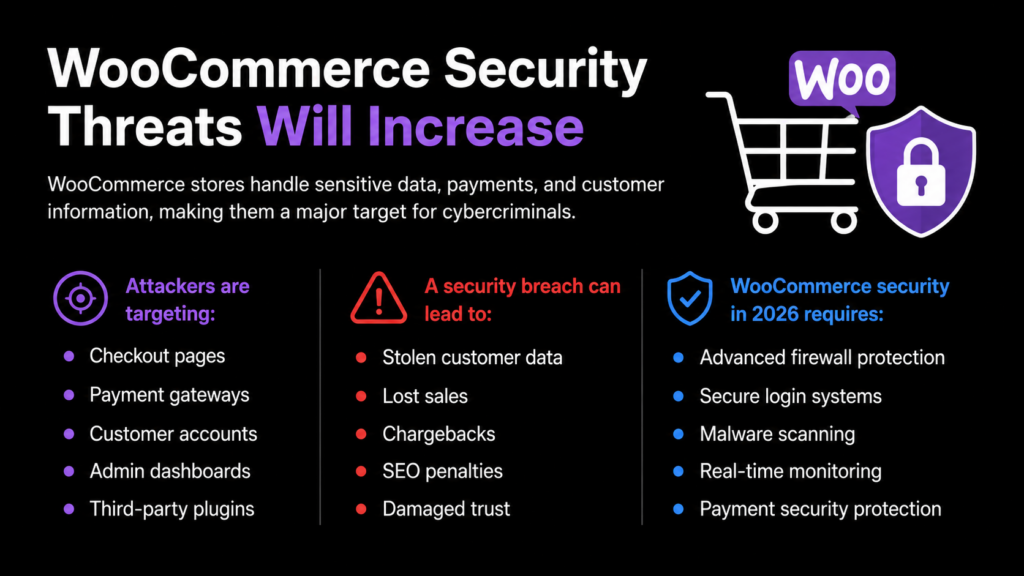
WooCommerce websites are becoming one of the biggest targets for cybercriminals in 2026. Online stores handle sensitive customer data, payment information, login credentials, and transaction records, making them highly valuable for attackers.
According to Hostinger, WooCommerce stores are frequent targets for brute force attacks, payment fraud, and malware infections. The large amount of customer and payment data processed by WooCommerce websites makes them highly attractive to cybercriminals.
As e-commerce continues to grow, attackers are increasingly targeting:
- Checkout pages
- Payment gateways
- Customer accounts
- Admin dashboards
- Third-party WooCommerce plugins
Even a small security breach can lead to stolen customer data, lost sales, chargebacks, SEO penalties, and damaged trust.
That’s why WooCommerce security in 2026 requires:
- Advanced firewall protection
- Secure login systems
- Malware scanning
- Real-time monitoring
- Payment security protection
VMP™ Security helps WooCommerce websites stay protected with advanced firewall protection, malware scanning, login security, and real-time threat monitoring for WordPress eCommerce stores.
9. Centralized Multi-Site Security Management Will Grow
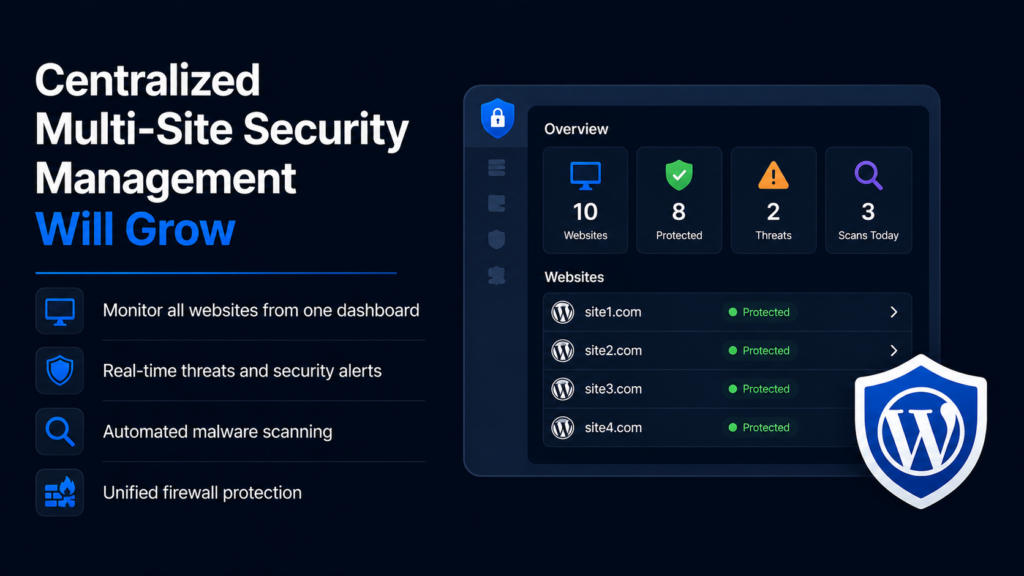
Managing multiple WordPress websites is becoming more difficult in 2026 as cyber threats continue to grow. Agencies, developers, and businesses now need centralized security systems to monitor vulnerabilities, malware alerts, firewall activity, and login threats across all websites from one dashboard.
According to Reuters, the FBI reported that cybercrime losses exceeded $16 billion globally in 2024, marking a 33% increase compared to the previous year.
Modern WordPress security platforms now focus on:
- Centralized monitoring
- Multi-site security management
- Real-time alerts
- Automated malware scanning
- Unified firewall protection
VMP™ Security helps simplify WordPress security management with centralized monitoring, malware scanning, and real-time threat visibility across multiple websites.
10. Security Education Will Become a Necessity
Technology alone can’t stop every cyberattack. In 2026, human error continues to be one of the biggest causes of WordPress security breaches. Weak passwords, phishing scams, outdated plugins, and poor security practices still leave many websites vulnerable.
According to Proofpoint’s State of the Phish report, 71% of working adults took risky actions after receiving suspicious emails, highlighting how human behavior continues to be a major cybersecurity risk.
That’s why security education is becoming just as important as security tools. Website owners, developers, agencies, and teams now need better awareness about:
- Plugin and theme security
- Phishing attacks
- Password protection
- Two-factor authentication
- Malware risks
- Vulnerability management
As cyber threats continue evolving, ongoing security learning and awareness will play a major role in protecting WordPress websites in 2026.
The VMP™ Security Learning Center helps WordPress users learn about website security through tutorials, guides, and best practices. It also provides security alerts, threat updates, and helpful resources to stay protected from modern cyber threats.
11. Best Practices to Prepare for WordPress Security in 2026
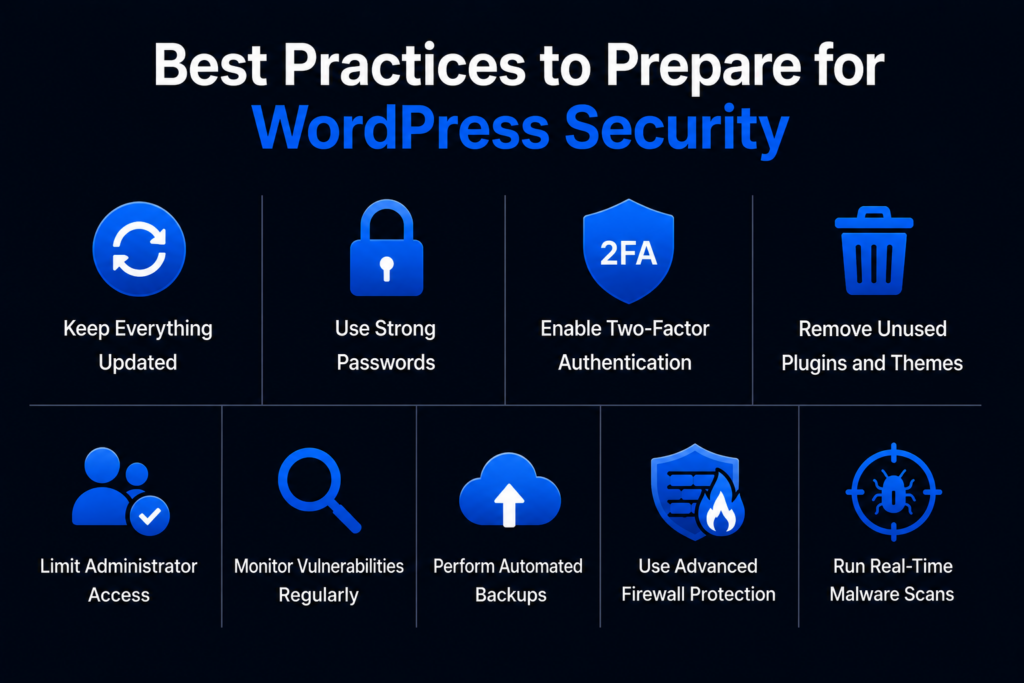
WordPress security in 2026 is all about proactive protection. As cyberattacks become more automated and AI-driven, website owners need stronger security habits to reduce risks before problems happen.
One of the most important steps is keeping WordPress core, plugins, and themes updated. Many attacks target outdated software with known vulnerabilities that already have security patches available.
Website owners should also focus on:
- Using strong passwords
- Enabling two-factor authentication
- Removing unused plugins and themes
- Limiting administrator access
- Monitoring vulnerabilities regularly
- Performing automated backups
- Using advanced firewall protection
- Running real-time malware scans
Security monitoring is becoming equally important. Modern websites need continuous visibility into suspicious logins, malware activity, firewall events, and plugin vulnerabilities.
That’s where layered protection matters most. VMP™ Security helps WordPress websites stay protected through advanced firewall protection, malware scanning, login security, vulnerability monitoring, and real-time threat intelligence designed for modern WordPress security challenges.
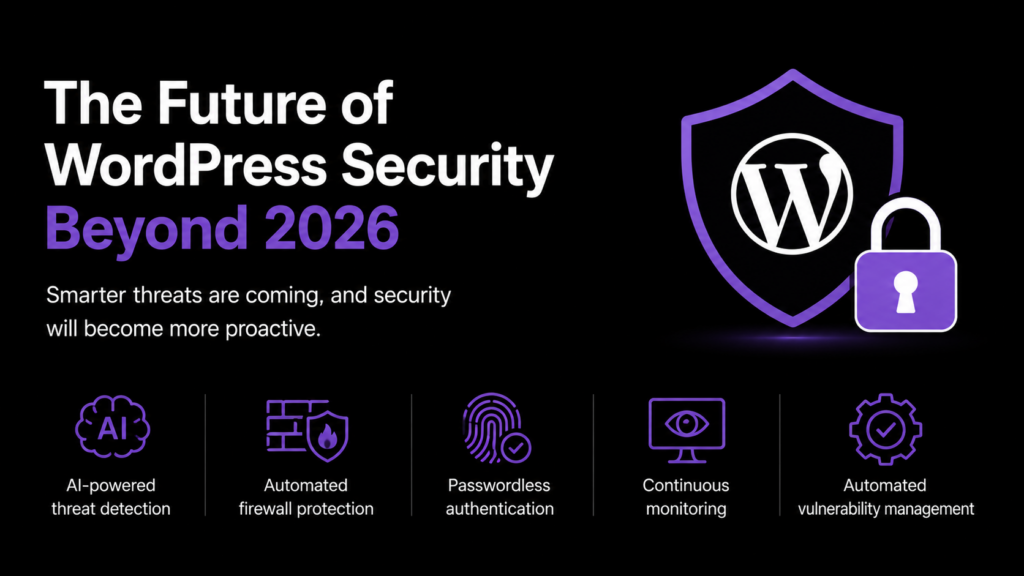
12. The Future of WordPress Security Beyond 2026
Final Words
WordPress security in 2026 is evolving rapidly as cyber threats become smarter, faster, and more automated. From AI-powered attacks to plugin vulnerabilities and malware infections, website owners face more security risks than ever before.
Modern WordPress security now depends on proactive protection strategies like advanced firewall protection, malware scanning, real-time threat intelligence, and stronger login security. Waiting until after an attack is no longer enough.
As WordPress continues to power a large portion of the internet, strong security practices will become essential for every website, whether it’s a personal blog, business site, or WooCommerce store.
Plugin vulnerabilities, AI-powered attacks, phishing scams, and malware infections are among the biggest WordPress security threats in 2026.
Plugins add extra functionality to WordPress websites, but outdated or vulnerable plugins can create security gaps that attackers exploit.
Malware scanning helps detect infected files, malicious code, suspicious activity, and unauthorized changes before they cause serious damage.
A Web Application Firewall helps block malicious traffic, brute force attacks, bots, and exploit attempts before they reach your website.
Two-factor authentication adds an extra security layer to WordPress logins and helps reduce the risk of stolen passwords and unauthorized access.
Yes. WooCommerce websites process payment and customer data, making them attractive targets for hackers, malware attacks, and payment fraud.
Real-time threat intelligence helps detect and block new threats quickly before they can exploit WordPress vulnerabilities.
VMP™ Security helps protect WordPress websites against malware, brute force attacks, plugin vulnerabilities, suspicious logins, and evolving cyber threats through layered security protection.